
The Air You Breathe Is a Business Decision
Jul 31, 2026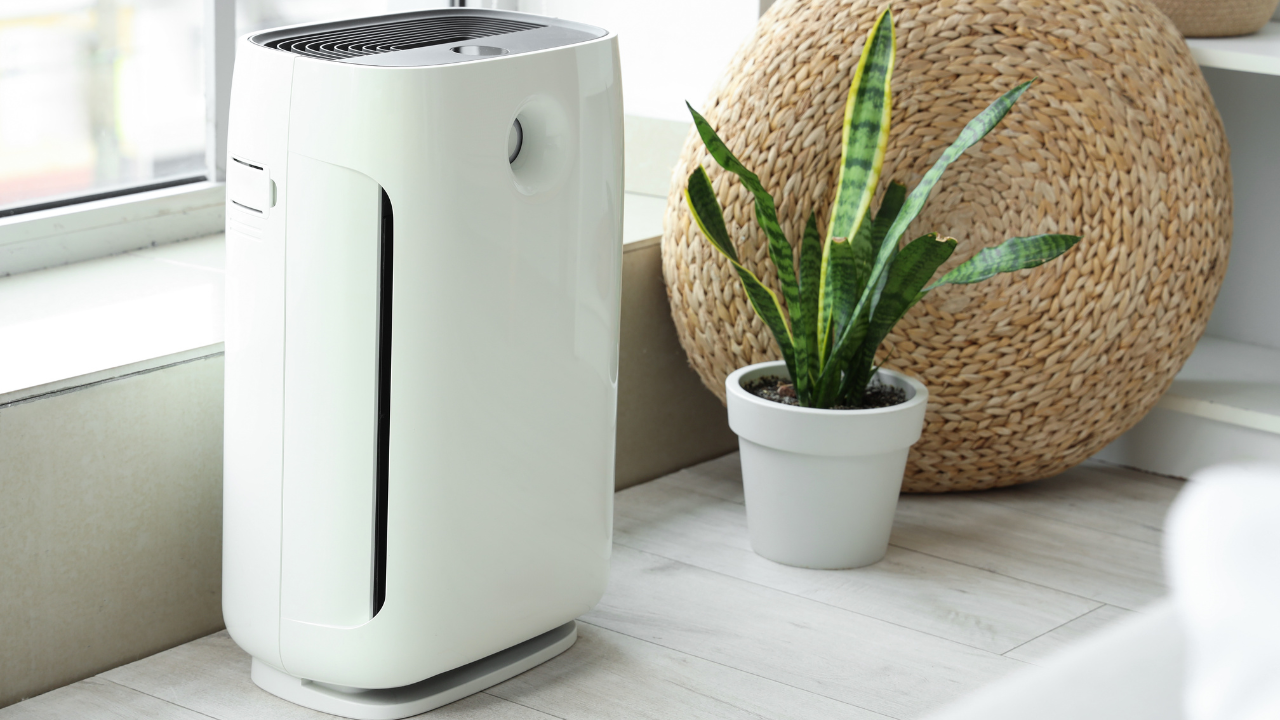
Why indoor air quality is one of the most overlooked variables in your cognitive performance and your health.
You have probably spent considerable time and energy optimizing how you work.
Your systems. Your schedule. Your team. The strategies that move the business forward and the habits that keep you sharp. You have invested in your skills, your knowledge, and your capacity to lead.
But there is one variable most high-performing women have never considered. And it is surrounding them every single hour of every working day.
The air inside the space where you think, create, decide, and lead.
Your indoor environment is either supporting your cognitive performance or quietly undermining it. And the research on this is not subtle. Poor indoor air quality has measurable effects on concentration, decision-making speed, memory, and the kind of executive function that ambitious work requires.
This is not a wellness conversation at the margins. It is a business conversation at the center. The brain doing your most important work is breathing whatever is in the air around it. What that air contains matters more than most women have ever been told.
You have optimized almost everything about how you work. The air you are breathing while you do it may be the variable you have never looked at.
The Indoor Air Problem Most Women Do Not Know They Have
The Environmental Protection Agency has reported consistently that indoor air can be two to five times more polluted than outdoor air. In some cases, significantly more. Most people find this surprising because the home and office feel like controlled, safe environments compared to the world outside.
But indoor spaces concentrate pollutants in ways the open air does not. They accumulate off-gassing from furniture, flooring, paint, and building materials. They trap particles from cooking, cleaning products, candles, and synthetic fragrances. They recirculate dust, mold spores, and volatile organic compounds through HVAC systems that are rarely cleaned as often as they should be.
You spend the majority of your waking hours inside. If the air in those spaces is compromised, the brain and body you are depending on to perform are operating in a compromised environment. Every hour of the working day.
This is a variable within your control. And addressing it produces returns that most women do not anticipate until they experience them.
What Poor Air Quality Does to the Brain
The brain is an oxygen-dependent organ. It consumes approximately twenty percent of the body's total oxygen supply despite representing only about two percent of its weight. The quality of the air the brain receives directly affects its ability to function.
Cognitive performance.
Research published in Environmental Health Perspectives found that doubling the ventilation rate in office environments produced significant improvements in cognitive function scores across nine domains including crisis response, information usage, and focused activity. The participants were not in unusually polluted environments. They were in typical office conditions. Better air produced measurably better thinking.
Focus and sustained attention.
Elevated levels of carbon dioxide, which accumulate naturally in poorly ventilated spaces as people breathe, are one of the most common and least recognized drivers of afternoon cognitive fog. The heaviness and difficulty concentrating that many women experience in the mid-afternoon is often attributed to blood sugar or fatigue. In many cases, it is the CO2 level in the room they have been sitting in for several hours.
Inflammation and the nervous system.
Particulate matter and volatile organic compounds in indoor air are absorbed through the respiratory system and enter the bloodstream. They contribute directly to systemic inflammation and have been shown to activate the stress response in the nervous system even when the person is not consciously aware of any environmental problem. For a woman already managing inflammation through midlife hormonal shifts, this is a significant and avoidable compounding factor.
The brain fog you are pushing through in the afternoon may not be about your energy. It may be about the air in the room.
The Fragrance Problem Nobody Is Talking About
This is the part of the conversation that surprises women most. And it is one I want to address directly.
The air fresheners, plug-in diffusers, scented candles, and synthetic fragrance products that fill most homes and offices are not making the air better. They are making it significantly worse.
The word fragrance on a product label is a legally protected term that can represent a blend of hundreds of undisclosed synthetic chemicals. Many of these chemicals are classified as volatile organic compounds. Several are known endocrine disruptors, meaning they interfere directly with the hormonal system. Some have been linked to respiratory irritation, nervous system effects, and increased inflammatory load.
This matters enormously for women in midlife. The hormonal system is already navigating a significant transition. Adding a daily exposure to endocrine-disrupting synthetic fragrance compounds into the air being breathed in the home and workspace creates a burden the body has to process on top of everything else it is already managing.
The plug-in air freshener on the outlet next to your desk. The scented candle that makes the office feel welcoming. The fabric spray on the couch where you take calls. These are not neutral. They are delivering a continuous low-dose chemical exposure that the body registers as a toxic input and works to eliminate.
Removing synthetic fragrance from your indoor environment is one of the highest impact, lowest cost changes you can make for your hormonal health, your inflammatory load, and the quality of the air your brain is breathing every day.
If you love scent in your space, there are clean alternatives. Pure beeswax or soy candles with essential oils. A diffuser with therapeutic grade essential oils chosen for their actual air-clearing properties. Fresh air when the weather allows. These support the environment rather than burden it.
The products designed to make your space smell clean may be among the most significant sources of indoor air pollution you are living with.
The Most Common Indoor Air Offenders
Volatile organic compounds from furniture and flooring.
New furniture, synthetic carpeting, laminate flooring, and fresh paint off-gas volatile organic compounds for months after installation. If you have recently redecorated or moved into a new space, this is worth knowing. Increasing ventilation during and after these changes reduces the accumulation significantly.
Mold and moisture.
Mold spores are one of the most common and most underestimated drivers of chronic fatigue, brain fog, and immune dysregulation in women. They thrive in areas of hidden moisture including behind walls, under flooring, and in HVAC systems. If your symptoms feel disproportionate to your circumstances and do not resolve with other interventions, mold exposure is worth investigating seriously.
Cleaning products.
Conventional cleaning products are among the highest sources of volatile organic compound exposure in the home. The same products that make surfaces visibly clean are releasing chemical compounds into the air that the body then has to process. Switching to fragrance-free, non-toxic cleaning alternatives reduces indoor air pollution immediately and significantly.
Dust and particulate matter.
Dust in the home carries far more than most people realize. It contains skin cells, pet dander, dust mites, mold spores, and the chemical residue from everything that has ever off-gassed in the space. Regular vacuuming with a HEPA filter vacuum and damp dusting rather than dry dusting substantially reduces the particulate load circulating in the air you breathe.
Air Purification as a Performance Investment
A quality air purifier with a true HEPA filter and an activated carbon layer is one of the most direct investments you can make in the quality of your indoor air and by extension the quality of your cognitive performance.
HEPA filtration captures particles down to 0.3 microns, including dust, pollen, mold spores, pet dander, and many bacteria. Activated carbon absorbs volatile organic compounds and odors that HEPA alone cannot capture. Together they address the two primary categories of indoor air pollution.
Where to prioritize: the space where you do your most focused cognitive work and the bedroom where your brain and body do their nightly restoration. These are the environments where air quality has the most direct impact on your performance and your recovery.
This is not a luxury purchase. It is a business infrastructure decision. The brain doing your most important work deserves the cleanest possible air to do it in. And the body restoring itself overnight deserves an environment that supports that restoration rather than adds to its chemical processing load.
Simple Steps That Change the Air Today
You do not need to overhaul everything at once. Start with what produces the most immediate impact.
Open windows when weather and outdoor air quality allow. Even twenty minutes of fresh air circulation significantly reduces the concentration of indoor pollutants that have accumulated. This is one of the simplest and most underused air quality interventions available to anyone.
Remove synthetic fragrance products from your primary living and working spaces. This single change reduces your chemical exposure and your hormonal burden in a way that costs nothing and begins immediately.
Add plants strategically. Certain houseplants have demonstrated air-purifying properties, absorbing carbon dioxide and some volatile organic compounds. Snake plants, pothos, and peace lilies are among the most effective and easiest to maintain. They also contribute to a visual environment that signals calm to the nervous system.
Invest in a quality air purifier for your workspace and bedroom. Run it consistently rather than occasionally. The benefits are cumulative and they compound over time.
The air around you is not a fixed condition. It is a variable you can actively manage. And managing it well is one of the most direct forms of care you can give to the brain and body that carry your vision every single day.
If You Have Never Thought About What You Are Breathing
The environment conversation is one of the most important and least addressed areas of whole-person health for women who lead. It sits inside the Physical Vitality layer of The Inner Empire™ framework for exactly this reason. What surrounds you is not separate from how you function. It is part of the system.
If you are ready to talk, book your Clarity Call. The link is below.
About Debbie Roppo
Debbie Roppo is a National Board Certified Health and Wellness Coach, Functional Medicine Certified Health Coach, and the founder of The Inner Empire™. Her work helps women in midlife and beyond strengthen the body and mind that carry their vision, because the outer empire a woman builds is only as strong as the Inner Empire™ that sustains it.
DebbieRoppoHealthCoach.com | Debbie@DebbieRoppoHealthCoach.com
Stay connected with news and updates!
Join our mailing list to receive the latest news and updates from our team.
Don't worry, your information will not be shared.
We hate SPAM. We will never sell your information, for any reason.